Cross the border into Botswana and the safari changes character. At Chobe the river does the work.
Chobe became Botswana’s first national park in 1968 and covers roughly 11,000 square kilometres. The Chobe River forms its northern boundary, rising in the Angolan highlands and reaching Botswana at Ngoma. The stretch known as the Chobe Riverfront is the most accessible part of the park and holds its densest concentration of wildlife.
Why the river matters
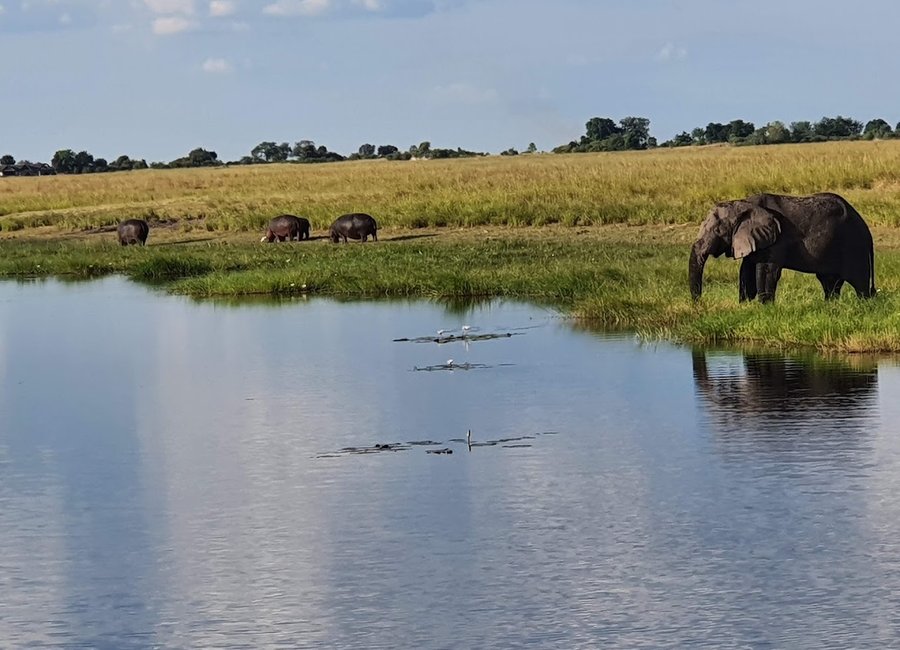
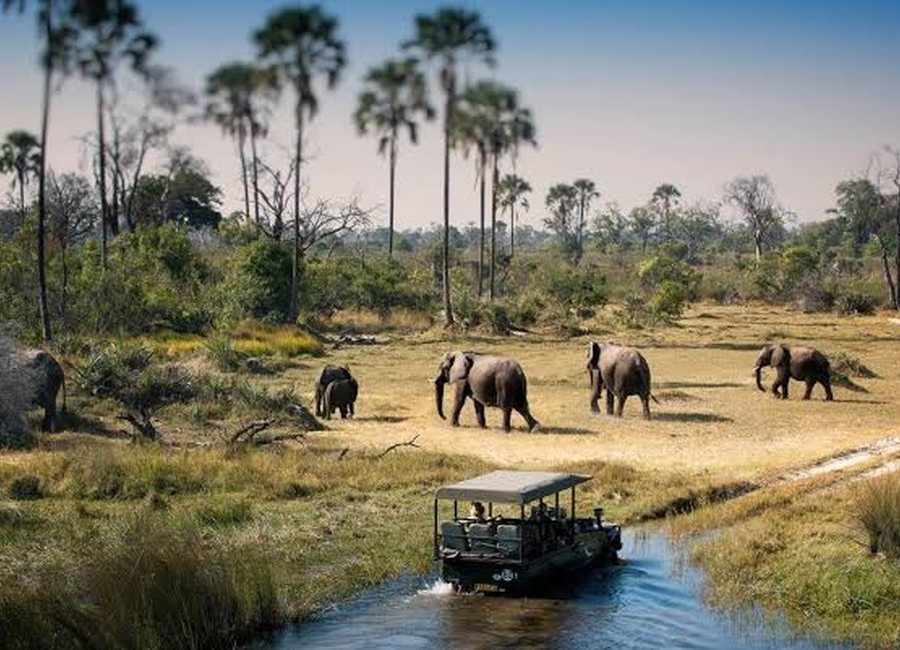
The Botswana Tourism Organisation describes the riverfront as the most visited part of the country’s big game country, best known for the elephant and Cape buffalo herds that come down to drink through the dry winter months. On an afternoon drive in that season you may see hundreds of elephants at once, and the main Serondella road can become impassable as family herds cross it to reach the water.
Fifteen different species on a single drive is a realistic expectation along the riverbank. Waterbuck, red lechwe, puku, giraffe, kudu, roan and sable, impala, warthog, bushbuck, monkeys and baboons are all common, with lion, leopard, hyena and jackal never far behind them.
How Chobe is usually done from Victoria Falls
A Chobe day trip is one of the most popular excursions from the Falls. A typical day combines a transfer to the border, a boat safari on the Chobe River, lunch, a game drive in the park and the return journey.
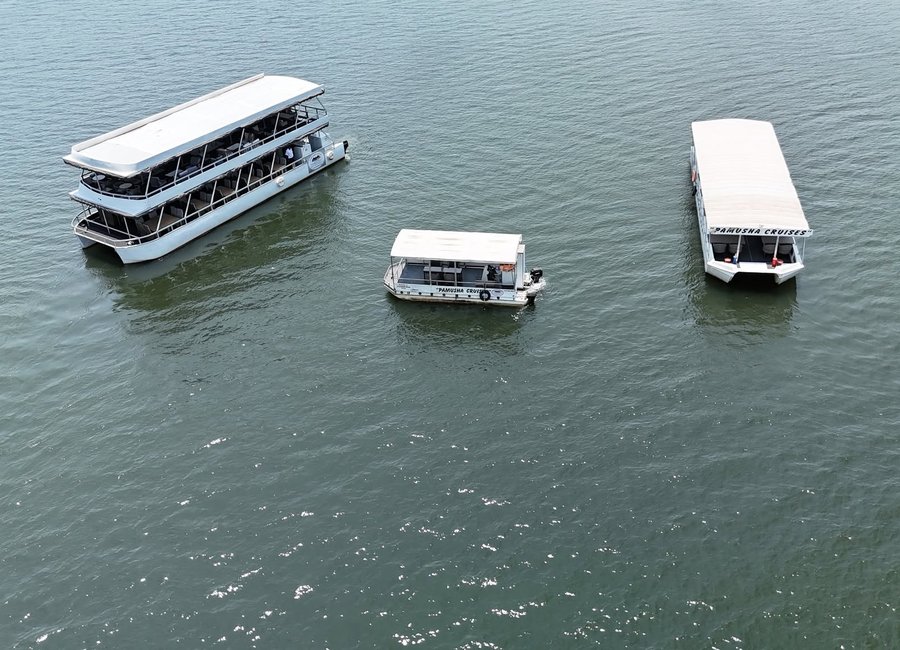
The boat is what makes Chobe distinctive. Approaching elephant, hippo and buffalo from the water gives a completely different perspective from a vehicle, and the birdlife along the banks is exceptional.
Border formalities apply. This is an international crossing into Botswana. Carry your passport, and check entry requirements for your nationality before you travel.
Departure times, border procedures and operator schedules vary. We will confirm the details when you book.